Accessible infrastructure
Aboveground tanks can be reached for inspection and management without excavating buried systems.
 Start a project ↗
Aboveground fueling advantage
PAGS keeps critical fuel infrastructure visible, monitorable and accessible instead of burying it beneath the site.
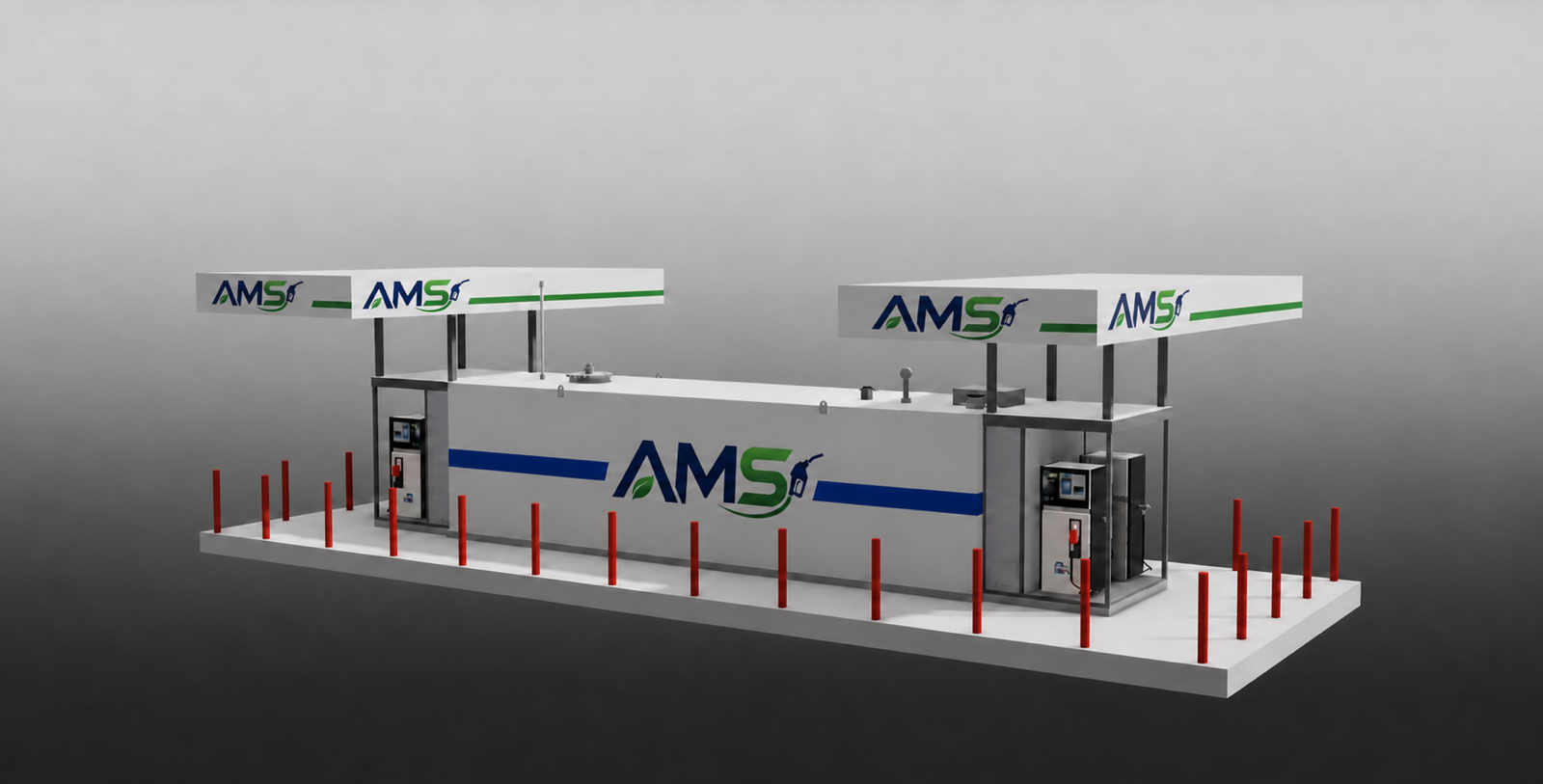
Aboveground tanks can be reached for inspection and management without excavating buried systems.
After regulatory approval, delivery and site readiness, PAGS installation can take seven days or less rather than months of conventional construction.
Reduced underground construction can lower the time, disruption and development drag associated with traditional stations.
A compact, modular approach may unlock properties where a conventional underground station is not practical.
Common questions
No. A project must satisfy the applicable local and state approval process, which can include zoning, fire, environmental, engineering and access review.
Aboveground infrastructure remains visible and accessible for inspection, monitoring and management without excavating a buried tank system.
No. Property dimensions, circulation, setbacks, utilities, demand and local requirements determine whether a location is viable.
No. The seven-days-or-less statement applies after regulatory approval, site readiness and delivery. Approval and preparation timelines vary.